
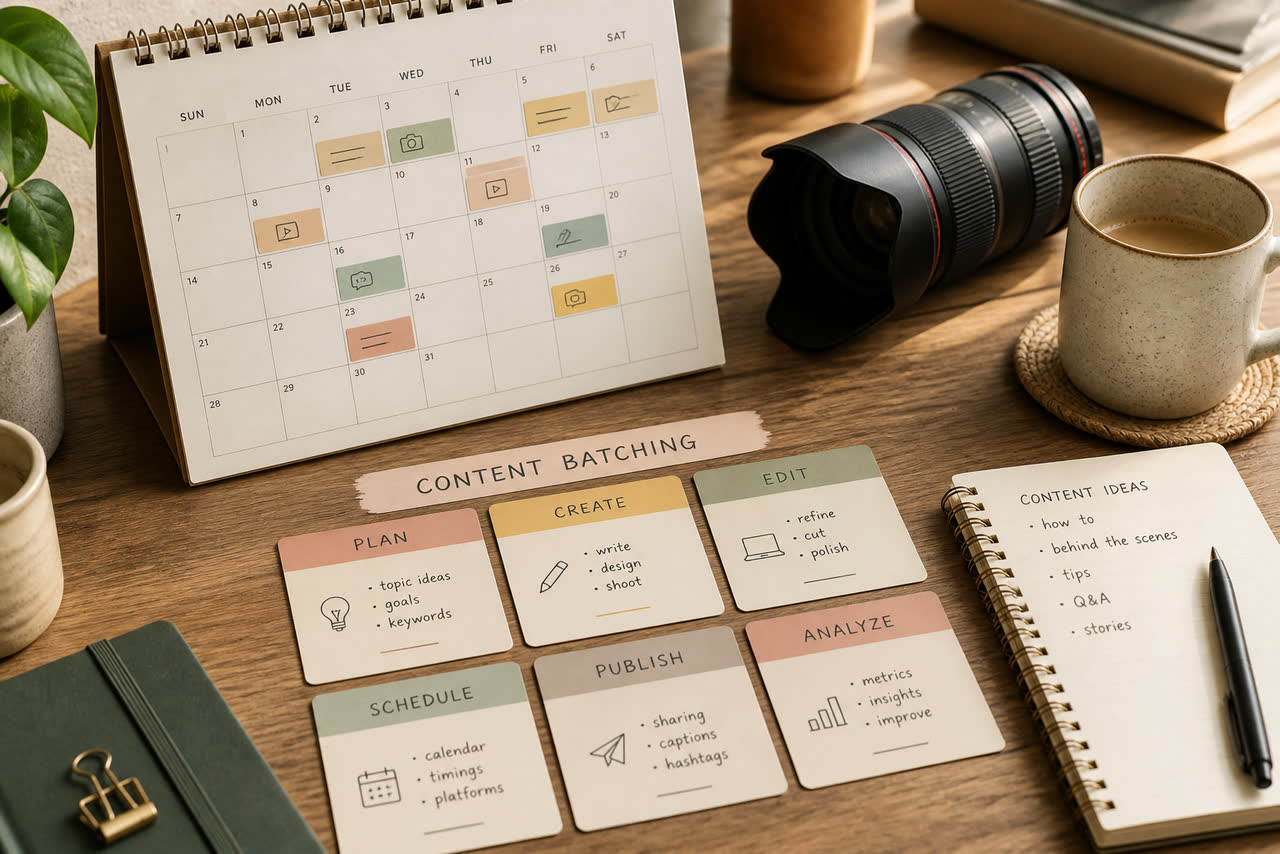
Consistency is the quiet engine behind channel growth, yet most creators try to manufacture it with daily willpower. They wake up, invent a topic, film under time pressure, edit until midnight, and upload late with a weak thumbnail. By week three they are exhausted and the calendar breaks. Content batching replaces that cycle with intentional clusters of work: research several ideas together, film several videos in one session, edit in focused blocks, and schedule publishes ahead. Batching does not remove creativity. It protects creativity from context switching and decision fatigue. When filming day is filming day, your brain stops negotiating whether today is a writing day disguised as anxiety. The result is a steadier release rhythm and less shame when life interrupts, because the buffer already exists.
Batch the thinking before you batch the filming
A useful batch starts on paper. Collect fifteen to thirty topic seeds from comments, search suggestions, competitor gaps, and your own expertise. Rank them by audience value and production difficulty. Group similar setups so you can film three desk videos in one clothing and lighting configuration, then shoot outdoor B-roll in another block. Write titles and thumbnail concepts while the ideas are fresh, because packaging decisions are easier before you are tired from recording. Create a simple spreadsheet or notes doc with columns for working title, hook sentence, key points, assets needed, and publish target date. This planning batch might take an afternoon and save a month of daily flailing.
Scripts or outlines should be batched too. Writing five outlines in one sitting reveals repeated jokes, overlapping points, and stronger series connections. You can also spot which episodes need guests, screen recordings, or prop prep so filming day is not derailed by missing pieces. Keep outlines short enough to sound human on camera. Batching is not an excuse to overproduce a television writers room if you are a solo creator. It is a way to arrive at the set knowing what each video must deliver in the first thirty seconds.
Film in series, edit in passes
Filming batches work best when the environment stays stable. Lock white balance, mark your tripod position, and wear compatible outfits that can be mixed across thumbnails without looking like the same shirt every time. Record room tone and a clap or slate note for each take so editing stays organized. Capture alternate hooks while the energy is high; choosing the best open later is easier than reshooting under deadline. Between videos, reset mentally with a short walk or water break rather than checking analytics, which can spiral into doubt mid-batch.
Editing batches should use passes, not perfectionism per timeline. First pass: rough cut all videos to structure. Second pass: clean audio and pacing. Third pass: graphics, captions, and color. Fourth pass: thumbnails and metadata. Context switching inside a single video — writing a title mid-color-grade — recreates the chaos batching was meant to solve. Templates accelerate every pass: caption styles, intro end cards, loudness targets, and export presets. If you publish Shorts and long-form, decide whether vertical cuts are part of the same week’s batch or a separate mini-batch so horizontal editing does not stall forever.
Schedule the buffer and protect recovery days
A batch without a publishing plan becomes a hard drive of unfinished guilt. Upload or schedule as you complete packages, aiming for a buffer of two to four weeks if your cadence is weekly. Buffers absorb illness, travel, and creative dry spells without breaking the public promise of consistency. Use YouTube Studio scheduling and keep a calendar that also notes community posts or Shorts so formats do not collide on the same afternoon. Official upload and format guidance at https://support.google.com/youtube/answer/6373554 can help you standardize what “done” means for each format before you schedule it.
Protect recovery after a heavy batch. Creators who film eight videos then immediately start the next plan burn out in a different costume. Build a lighter day for analytics review, comment replies, and idea capture. Study retention and traffic sources with YouTube’s help articles such as https://support.google.com/youtube/answer/9314356 so the next batch improves hooks and topics rather than only increasing volume. Batching is a quality strategy as much as a quantity strategy: you gain enough distance to notice weak opens before they go live.
Make the system small enough to survive real life
Overbuilt batching systems fail. If your plan requires a studio manager, five apps, and a color-coded ritual you abandon under stress, simplify. Solo creators often succeed with one notes doc, one folder structure per month, and one recurring calendar block for filming. Start with batching two videos at a time if eight feels fantasy. The goal is a repeatable cadence, not a productivity identity. When collaborators join, write the batch checklist once: naming conventions, where masters live, loudness targets, thumbnail size, and who schedules. Clear systems keep the channel shipping when you are offline.
If your channel connects to a website or membership pages, batch those updates in the same planning window so public promises stay aligned. Clear site presentation supports audience trust beyond the player; Google’s AdSense overview at https://www.google.com/adsense is a useful reminder that content businesses live across surfaces, not only inside uploads. Still, the core win of batching is emotional: you stop negotiating with yourself every morning about whether you are a creator today. The work is already framed. You execute the next block, publish from the buffer, and return to living a life that feeds the next set of ideas. Consistency then becomes a property of the system rather than a mood. That is how creators stay visible for years without turning every day into an emergency production.
Measure batching by calm and cadence, not by how impressive the spreadsheet looks. If you publish on time for a month with fewer late nights, the system is working. If you batch twenty outlines and film none, shrink the plan. Review monthly: which batch sizes felt sustainable, which filming setups wasted time, which editing passes can merge. Adjust like a craftsperson, not like a guru reinventing your life. The creators who look consistent from the outside usually look boring in their calendar on purpose. They protect deep work blocks, keep a buffer, and refuse to romanticize last-minute heroics. Build that boring calendar, and your audience will experience it as reliability — one of the strongest brand signals a channel can earn.