
Viewers forgive imperfect picture longer than they forgive muddy audio. On YouTube especially, people often listen while glancing at another screen, commuting with one earbud, or watching on a phone speaker in a bright room. Your voiceover is the spine of explanation, pacing, and trust. A clearer voice does not require a radio studio. It requires intentional writing, consistent recording distance, light acoustic control, and editing that removes friction without making you sound robotic. Creators who chase cinematic music beds first and treat narration as an afterthought usually discover the hard way that retention drops where words become hard to catch. Treat voiceover as a product feature of the channel: same tone, same loudness habits, same clarity standard across episodes.
Write for speaking, not for essays
A script that looks elegant on a page can choke in the mouth. Prefer short sentences, concrete verbs, and one idea per breath. Read drafts out loud before you record. Anywhere you stumble, rewrite. Replace abstract stacks of nouns with actions a viewer can picture. If you teach a process, narrate the next physical or on-screen step before you explain why it matters; orientation first, theory second. Leave tiny pauses in the script where you will need room for B-roll or a UI demo. Those pauses prevent the frantic feeling of talking over every visual change. For bilingual creators, write and record each language as its own performance rather than forcing a literal word swap that wrecks rhythm.
Hook writing belongs in the first lines you speak, not only in the title. Promise the outcome, define the scope, and tell viewers what they will be able to do after watching. Then move. Long throat-clearing about your week trains people to skim mentally. YouTube’s retention tools help you see where narration loses people; start with the creator help article at https://support.google.com/youtube/answer/9314356 and compare early drop-offs against scripts that bury the point. If a paragraph exists only to sound smart, cut it. Clarity is a stronger brand signal than vocabulary density.
Record like distance and room are part of the mic
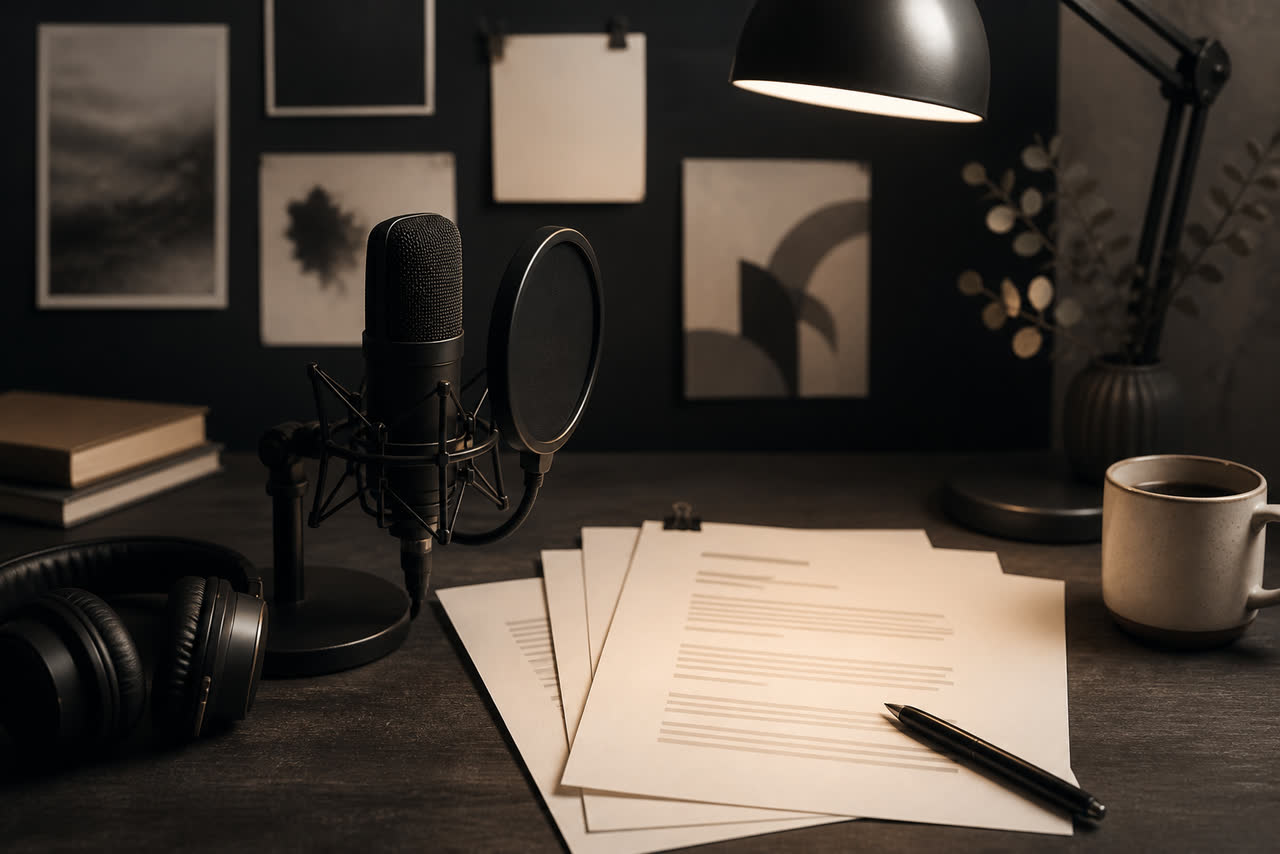
Most home voiceover problems are distance and reflections, not missing plugins. Stay a consistent hand span from the microphone, speak across the capsule if plosives pop, and mark your chair position so every session matches. Soften the room with a closet of clothes, thick curtains, or a small blanket fort behind the mic; you are reducing slap echo, not building a concert hall. Turn off fans and notifications. Record a ten-second room tone slate at the start of each session for cleanup later. Gain-stage so normal speech peaks safely below clipping with headroom for laughter or emphasis. If you must punch in after a break, match posture and energy before you match EQ. A sudden louder, brighter paragraph mid-video feels like a different host.
Choose a mic pattern and placement that fit your space. A dynamic mic can reject a lively room better than a sensitive condenser on a desk. A USB mic is fine if your chain is consistent and your levels are honest. Headphones are mandatory while recording so you catch cable rustle, mouth clicks, and distant traffic before they live in the timeline. Keep water nearby and pace sessions so your voice does not thin out after forty minutes of pushing. If you stack voiceover across multiple days, listen to yesterday’s last paragraph before today’s first take. Continuity of performance matters as much as continuity of EQ.
Edit for intelligibility before you chase character
Start cleanup with the boring wins: remove long silences that feel like dead air, tighten breaths that distract without deleting all human air, and cut repeated false starts. Use gentle noise reduction; heavy denoising creates underwater artifacts that tire listeners. Equalize lightly to reduce boxy mud around the low mids and tame harsh esses if needed, then compress for even loudness rather than for a smashed radio effect. Loudness consistency across a video matters more than a dramatic vocal signature. Leave headroom so YouTube’s processing and phone speakers do not turn your peaks into crunch. If you add music, duck it under speech with automation or sidechain-style rides so narration owns the midrange.
Align voice to picture with intention. When you demonstrate software, speak the action as it happens or a half-beat before, not two sentences later. When you show a dangerous or costly step, slow the line and land the warning clearly. Captions should match the words you actually say; mismatched captions punish bilingual viewers and accessibility alike. After picture lock, do a phone-speaker pass in another room. If consonants vanish, brighten slightly or rewrite the line. Upload settings that preserve audio fidelity are part of the chain; review YouTube’s upload guidance at https://support.google.com/youtube/answer/6373554 so you are not undoing careful vocal work with a careless export preset.
Build a channel voice viewers can trust
Clarity is partly technical and partly character. Decide how formal you are, how often you joke, and how you handle uncertainty. Then keep that contract. A host who whispers mysteriously in one episode and shouts tips in the next forces the audience to recalibrate every week. Create a short voice bible: pace targets, words you avoid, how you pronounce brand and technical terms, and whether you address the viewer as you or we. Share it with guest editors or co-hosts. Over a season, that consistency becomes part of your brand the same way a color grade or intro sting does.
Use comments and analytics as feedback on intelligibility, not only on opinions. If viewers repeatedly ask questions you already answered aloud, the answer may have been buried under music, rushed, or placed while the visual was competing. If retention dips at dense explanation blocks, break them into shorter spoken steps with visual bookmarks. Creators who publish supporting articles beside videos should keep the same plain-language standard on the page; Google’s AdSense overview at https://www.google.com/adsense is a reminder that readable presentation and policy-aware publishing sit next to the media business. Your voiceover does not need to impress audio engineers. It needs to deliver meaning on the first listen, on a cheap speaker, in a noisy world. Write for the mouth, record for the room, edit for the phone, and protect loudness and diction as channel standards. That is how narration becomes an advantage instead of a weekly apology in the description.